
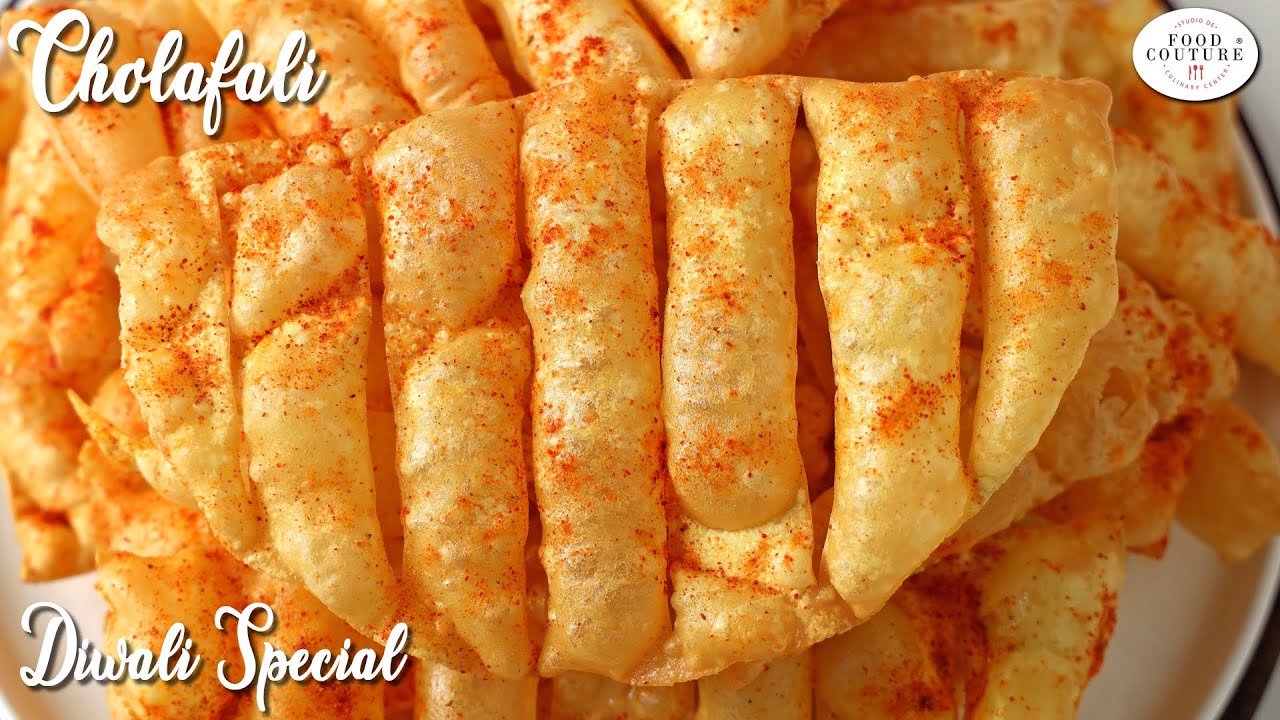
Chorafali ( ચોરાફળી ) Recipe | Fluffy Lentil Chips
Quick Links
- Introduction to Chorafali
- BUy Traditional chorafadi online from direct
- Traditional & Regional Value of Chorafali
- What to Serve With Chorafali?
- Is Chorafali Healthy? A Crispy Verdict.
- Why is Chorafali So Irresistible?
- Recipe: Key Ingredients (The Main Players)
- Recipe Steps (Quick Summary)
- Watch video and learn how to make Chorafali
- Tips & Tricks for Light & Crispy Chorafali
- Popular Variations of Chorafali
- Frequently Asked Questions (FAQ)
- Why is my chorafali hard and not light/porous?
- Can I make it without a special press?
- Why did it absorb too much oil and become soggy?
- How do I know when it’s done in the second fry?
- Is it gluten-free?
Chorafali Recipe: The Light, Crispy, and Peppery Gujarati Snack for Every Occasion
Learn to make Chorafali at home – the irresistibly light, crispy, and peppery Gujarati farsan! Made from besan and urad dal flour, this addictive snack is perfect for Diwali, tea time, or gifting. Easy, foolproof recipe inside.
Introduction to Chorafali
Picture the lightest, crispiest snack you’ve ever eaten. Now, imagine it seasoned with a bold kick of black pepper and cumin, so addictive you can’t stop at just one handful. That’s Chorafali for you—a feather-light, porous, and incredibly crunchy Gujarati specialty. Unlike dense fried snacks, Chorafali is airy and melts in your mouth, leaving behind a warm, spicy flavor. Made from a unique dough of besan and urad dal flour, pressed into thin strips, and fried twice for ultimate crispness, it’s the snack that disappears from the bowl faster than you can make it.
BUy Traditional chorafadi online from direct
Traditional & Regional Value of Chorafali
Chorafali is a beloved staple in Gujarati and Rajasthani households, especially during the festive season of Diwali and the monsoon month of Shravan. Its name is thought to come from its texture—’Chora’ meaning coarse or crumbly. It’s a quintessential “farsan” (savory snack) that is always present in the classic “Farsan Dabba” (snack box) gifted to family and friends. Making Chorafali at home is a festive ritual, often done in large batches. It represents the regional expertise in creating diverse textures from basic lentils and spices, and its long shelf life made it a perfect travel snack in earlier times.
Short Video Recipe
Watch recipe video about Chorafali ( ચોરાફળી ) Recipe | Fluffy Lentil Chips: आटा कुटने की झंझट के बीना कम टाइम में चोराफली | Cholafali Diwali Special Recipe | Chorafali Namkeen
आटा कुटने की झंझट के बीना कम टाइम में चोराफली | Cholafali Diwali Special Recipe | Chorafali ...
What to Serve With Chorafali?
Chorafali is a complete snack on its own but shines as part of a larger spread:
- As a Standalone Tea-Time Snack: Its bold flavor means it needs no dip.
- Mixed in Chivda (Bombay Mix): Crumbled chorafali is a key textural component in classic teatime chivda.
- Alongside Sweet Festive Dishes: Served next to sweet shrikhand or ladoo on a festive thali for a flavor contrast.
- With a Hot Beverage: Masala chai or coffee is the perfect pairing to wash it down.
- As a Topping for Chaat: Crushed chorafali adds amazing crunch to sev puri or bhel puri.
Is Chorafali Healthy? A Crispy Verdict.
Chorafali is a festive treat, not a health food. The main ingredients—besan (gram flour) and urad dal flour—are sources of protein and fiber. However, the dough is deep-fried not once, but twice (first on low heat to cook, then on high to puff), which significantly increases its fat and calorie content. The health verdict: It’s a delicious, indulgent snack meant for occasional enjoyment. The double frying also makes it very dry and porous, so it feels lighter than other fried snacks, but the oil content is still high. Enjoy it mindfully in moderation.
Why is Chorafali So Irresistible?
The obsession is all about its unique texture and bold seasoning. It’s incredibly light and crispy, with a satisfying “crunch” that isn’t heavy on the stomach. The flavor is unapologetically peppery and savory, making it incredibly moreish. The fun, irregular shapes and porous texture make it fun to eat. It also has a fantastic shelf life, staying crisp for weeks, so it’s always there for a quick, satisfying crunch. For many, the taste is deeply nostalgic, reminiscent of Diwali preparations and family gatherings.
Recipe: Key Ingredients (The Main Players)
- Besan (Gram Flour): The primary flour, provides structure and flavor.
- Urad Dal Flour (Split Black Gram Flour): The secret ingredient! It gives chorafali its signature crisp, light, and porous texture. Store-bought or homemade.
- Solid Fat: Ghee or hardened coconut oil is rubbed into the flour for flakiness.
- Seasoning Spices: Crushed black pepper, cumin seeds, ajwain (carom seeds), and asafoetida (hing) for digestibility and punch.
- Baking Soda: A tiny pinch for extra lift and crispness.
Recipe Steps (Quick Summary)
- In a bowl, mix 1 cup besan, 1 cup urad dal flour, salt, 1 tsp crushed black pepper, 1 tsp cumin seeds, ½ tsp ajwain, a pinch of hing, and a pinch of baking soda.
- Add 2 tbsp solid ghee or coconut oil. Rub into the flour until it resembles breadcrumbs.
- Sprinkle warm water, little by little, and knead into a very stiff dough. Cover and rest for 15-20 minutes.
- Divide dough. Using a chorafali mold or a pasta maker/noodle press with a wide-holed disc, press out thick, short strands directly onto a clean cloth or board.
- First Fry (Low Heat): Heat oil on low. Gently add pressed strands. Fry on low heat for 4-5 minutes until they are cooked but still white. Remove and drain. They will be soft.
- Let them cool and dry out completely for 15-20 minutes.
- Second Fry (High Heat): Heat the same oil to medium-high. Add the pre-fried chorafali in batches. They will puff up and become crisp in seconds.
- Remove immediately when golden and crisp. Drain on a wire rack. Cool completely before storing.
Watch video and learn how to make Chorafali
Tips & Tricks for Light & Crispy Chorafali
- Urad Dal Flour is Non-Negotiable: Do not substitute. It’s key to the porous, melt-in-mouth texture. You can make it by dry grinding washed urad dal to a fine powder.
- Very Stiff Dough: The dough must be as stiff as possible, like a rock. This ensures it presses well and absorbs less oil.
- The Double-Fry Method is Crucial: The first low-heat fry cooks the dough. The cooling period lets moisture evaporate. The second high-heat fry puffs and crisps it. Don’t skip steps.
- Cool Completely Between Fries: This drying period is essential for the final crispness. If they are damp, they won’t puff properly in the second fry.
- Store in Airtight Container: Once completely cool, store in an airtight tin. They stay fresh for weeks if kept dry.
Popular Variations of Chorafali
- Spicy Red Chorafali: Add red chili powder or Kashmiri chili powder to the dough for a red hue and different heat profile.
- Methi Chorafali: Add dried fenugreek leaves (kasoori methi) to the dough for a subtle, bitter flavor.
- Nylon Chorafali: Made with super-fine besan (nylon besan) for an even more delicate, melt-in-mouth texture.
- Baked Chorafali (Experimental): Press dough onto a baking sheet, spray with oil, and bake at 300°F until dry and crisp. It will be hard and not as porous.
- Mini Chorafali Pearls: Use a sev mold with tiny holes to make fine, pearl-like chorafali for mixing into chivda.
Frequently Asked Questions (FAQ)
Why is my chorafali hard and not light/porous?
The dough was too soft, you didn’t use urad dal flour, or you fried it only once on high heat. Ensure a stiff dough, use the correct flours, and follow the double-fry method religiously.
Can I make it without a special press?
It’s very difficult. The press creates the signature shape. In a pinch, you can roll the dough very thin and cut into short, thick strips with a knife, but texture will differ.
Why did it absorb too much oil and become soggy?
The oil temperature was too low during frying, especially during the first fry. Ensure the oil is at the right temp (low for first fry, med-high for second). Also, a stiff dough absorbs less oil.
How do I know when it’s done in the second fry?
It puffs up almost immediately and turns a light golden color. Do not let it get dark brown. It happens in seconds, so stay alert.
Is it gluten-free?
Yes! Besan and urad dal flour are naturally gluten-free. Ensure your baking soda and spices are uncontaminated.
chorafali recipe, gujarati crispy snack, diwali farsan, besan urad dal snack, peppery chorafali, light fried snack, double fry method, homemade chorafali, teatime snack, gluten-free indian snack
Recipe of Chorafali (ચોરાફળી) [Fluffy Lentil Chips] | જાણો Chorafali (ચોરાફળી) [Fluffy Lentil Chips] બનાવવાની પરફેક્ટ રીત

Chorafali
Ingredients
Equipment
Method
- In a mixing bowl, combine the gram flour, urad dal flour, salt, and baking soda.
- Add 1 tablespoon of oil and mix well.
- Gradually add lukewarm water and knead into a firm and stiff dough.
- Cover the dough with a damp cloth and let it rest for 30 minutes.
- After resting, pound the dough with a pestle or knead it vigorously for 5-7 minutes to make it smooth.
- Divide the dough into small, equal-sized balls.
- Take one ball and roll it out into a very thin, almost translucent, large circle (like a thin chapati).
- Using a knife or pizza cutter, cut the rolled circle into long, 2-inch wide strips.
- Heat oil in a kadai over medium-high heat.
- Fry the strips one by one. As soon as you put a strip in the hot oil, it will puff up immediately.
- Fry for only a few seconds until they are crisp and have a light cream color. Do not let them turn brown.
- Remove quickly and drain on paper towels.
- While the chorafali are still hot, sprinkle the mixture of red chili powder and black salt over them.
- Let them cool completely before storing them in an airtight container.
Notes
Rolling the dough as thinly as possible is essential for a light and crispy texture.
Fry on a medium-high heat for a quick puffing action. Frying for too long will make them hard.


